GymSmartAccess
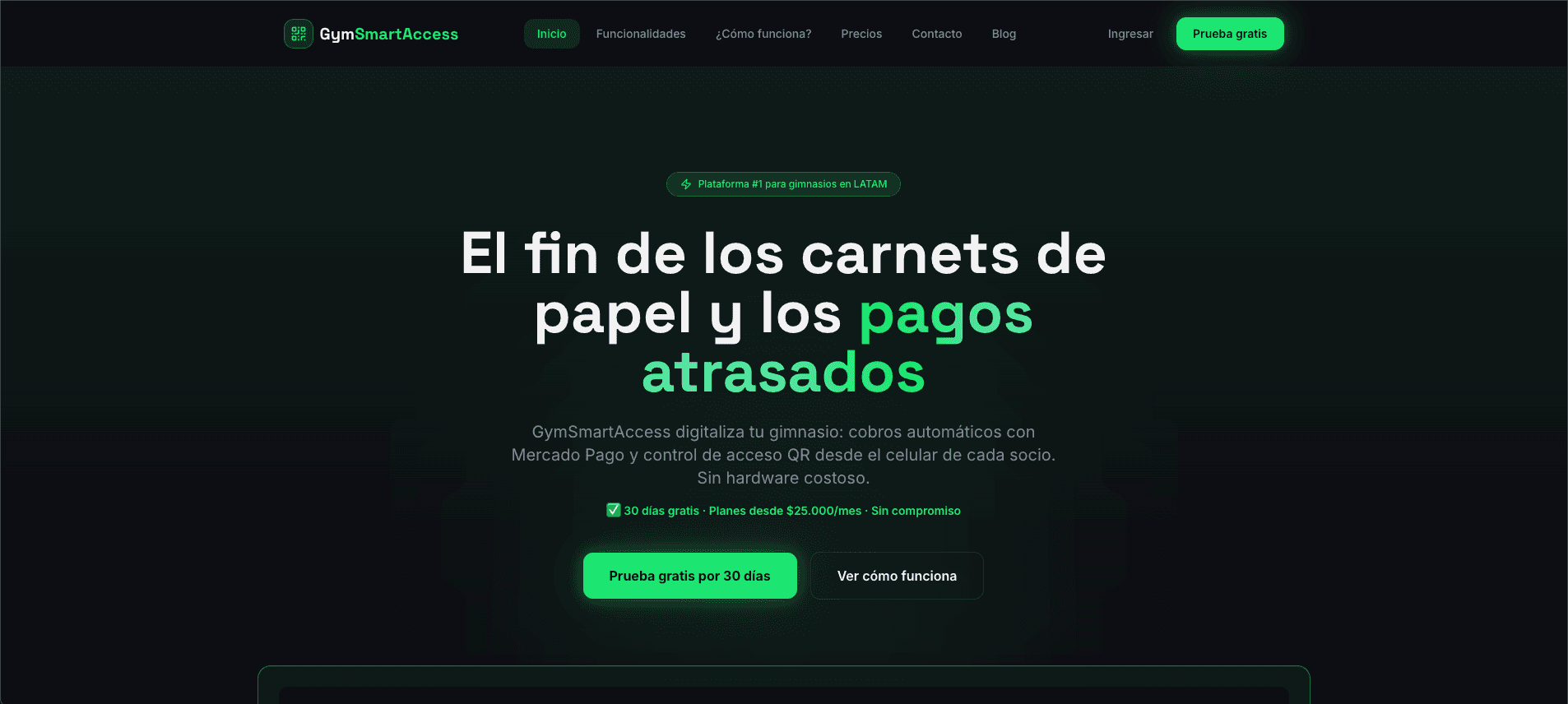
GymAccess is a B2B2C SaaS platform designed to modernize independent gyms. It replaces manual processes with a digital ecosystem of automated payments and QR access control without the need for expensive hardware.
Full Stack Developer & UX/UI Designer
4 months
Solo Project
Context
Independent gyms in LATAM often lose up to 20% of their income due to late payments, access fraud, and lack of digitalization. Traditional biometric access systems are inaccessible due to their high cost in USD.
The Problem
Manual cash collection loses value against inflation and consumes administration hours. Additionally, physical ID cards allow for membership sharing, reducing business profitability.
Design Process
I applied an iterative methodology based on Design Thinking to find the best solution.
Empathize
I researched the neighborhood gym market, identifying the frustration of owners having to 'chase' members for payment. I analyzed the use of Mercado Pago as a payment standard and the ubiquity of smartphones among members.
Define
The goal was to create a 'single source of truth' that automates billing and validates access in real-time through a visual monitor for the receptionist, eliminating human error.
Ideate
I proposed a trio of products: an administrative dashboard for the gym, a PWA for members to scan their QR, and a real-time monitor that visually and audibly notifies the member's status.
Prototype
I developed the system using Next.js and Supabase to ensure scalability and speed. I integrated Mercado Pago for recurring subscriptions and Make.com to automate the webhook flow without complex servers.
Test
I conducted pilot tests in local gyms, adjusting the monitor interface to be readable from a distance and reducing QR scan time to avoid peak-hour congestion.
Results and KPIs
The platform eliminated delinquency through automatic debit and reduced access fraud to zero thanks to the dynamic QR linked to the member's profile.
Learnings
This project taught me how to design high-impact technical solutions with low infrastructure costs, prioritizing ease of use for non-technical users in high-demand environments.